Premier Links Regional Instability to Rising Fuel Prices
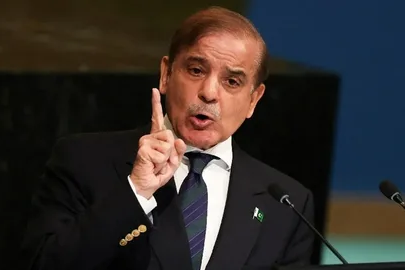
Prime Minister Shehbaz Sharif said on Wednesday, 4 November 2026, that Pakistan is continuing its efforts to restore peace in the Middle East. He made the remarks while addressing a federal cabinet meeting, as global fuel prices climb. He said oil prices had “skyrocketed” because of instability in the region. The comments show how Pakistan’s foreign policy and its economy are closely linked to the crisis.
Background: Pakistan’s Role in the Region
Pakistan has taken an active diplomatic role in the conflict involving Iran, the United States and Israel this year. In April, it hosted the first face-to-face talks between the US and Iran in 47 years. Those talks ended without a breakthrough, but also without a breakdown. Later rounds took place in Switzerland on 20 June and in Doha on 1 July.
On 2 April, Shehbaz said Pakistan was acting as an intermediary between Washington and Tehran. Islamabad hosted ministers from Saudi Arabia, Türkiye and Egypt and passed messages between the two sides. Pakistan and China also jointly urged all parties to stop strikes and start peace talks. The war has hurt Pakistan’s economy, and the government cut its development spending by Rs100 billion within three weeks.
Details: What the Prime Minister Said
The Cabinet Address
Shehbaz said, “Pakistan is playing its role as before in restoring peace in the region,” according to Dawn. He recalled recent engagements with Tehran and other regional actors. He also pointed to Pakistan’s involvement under the Makkah Joint Defence Agreement, which links Pakistan, Saudi Arabia and Türkiye.
Fuel Prices
The prime minister’s remarks came as the government announced relief at the pump. Dawn reported that the government cut the price of high-speed diesel by Rs7.76 per litre and petrol by Rs3.40 per litre. Officials link fuel costs to the unrest, since much of the world’s oil moves through the Gulf region.
The Wider Situation
Dawn’s live coverage on Wednesday described a return of strikes involving Iran, Israel and the US. It reported that Iran called Washington’s reply to its Strait of Hormuz plan “unconvincing” as President Trump confirmed strikes. China said avoiding new hostilities in the region is a “top priority.” Lebanon’s prime minister warned Hezbollah against joining another war.
Earlier Diplomacy and Statements
In September, Iranian President Masoud Pezeshkian told Shehbaz that the Islamabad MoU remained “fully acceptable” to Iran, according to Pakistan Today. The same report said Qatar was handling immediate shuttle diplomacy in New York while Pakistan worked through a separate channel with Tehran.
Shehbaz has also spoken to Saudi Crown Prince Mohammed bin Salman. In September he expressed solidarity after Houthi attacks on Saudi oil installations injured 73 people. He said he, Field Marshal Asim Munir and Deputy Prime Minister Ishaq Dar would keep working to defuse tensions. In June, he urged restraint after Iran and Israel exchanged strikes for the first time since a ceasefire.
Impact: Why It Matters
For Pakistan, the Middle East is both a diplomatic and economic concern. It relies on imported fuel, so higher oil prices raise costs for households and businesses. The government has used price cuts and spending reductions to limit the damage, but the pressure remains while the conflict continues.
For the region, Pakistan’s position is delicate. It has strengthened ties with Riyadh while keeping channels open with Tehran. The Foreign Office has said it was not considering joining military strikes on the Houthis in Yemen. That balance gives Islamabad access to both sides, but it also leaves little room for error.
Conclusion: What Comes Next
The immediate question is whether the renewed fighting can be contained and whether the US and Iran return to talks. Pakistan is likely to keep working through its regional partners, China and the Gulf states. Officials will also watch oil prices, since they affect the budget.
For now, Islamabad’s message is that it will keep trying, even as the situation shifts.
FAQs
How many current wives does Shehbaz Sharif have?
Shehbaz Sharif is currently married to two women. They are Begum Nusrat, whom he married in 1973, and Tehmina Durrani, an author whom he married in 2003. Wikipedia lists a third marriage, to Aaliya Honey in 1993, which ended in divorce in 1994. Some media reports claim he had five marriages in total, but the Sharif family has acknowledged only Nusrat and Tehmina. Polygamy is legal in Pakistan under certain conditions. He has four children with Nusrat, including Hamza Shahbaz.
Which Pakistani PM was hanged?
Zulfikar Ali Bhutto, Pakistan’s ninth prime minister, was hanged on 4 April 1979 in Rawalpindi. He was convicted in a murder conspiracy case after the military takeover led by General Zia-ul-Haq. His trial has long been criticised as unfair. In 2024, the Supreme Court gave an opinion that his trial did not meet the standards of a fair trial. He is the only Pakistani prime minister to have been executed. This answer comes from background knowledge, so verify the details before publishing.
How many times did Shahbaz Sharif become PM?
Shehbaz Sharif has become prime minister twice. He was first elected by the National Assembly on 11 April 2022, after a no-confidence vote removed Imran Khan, and served until August 2023. He took office again on 4 March 2024. Wikipedia describes him as the only person to hold the post for two consecutive terms and lists him as the 23rd and 24th prime minister. He is also the younger brother of Nawaz Sharif, who served three non-consecutive terms.